
A noisy garage door is easy to ignore until the day it stops. The good news is that the type of noise narrows the cause quickly. Stand inside the garage with the door moving and listen for where the sound comes from, the sides, the top or the opener.
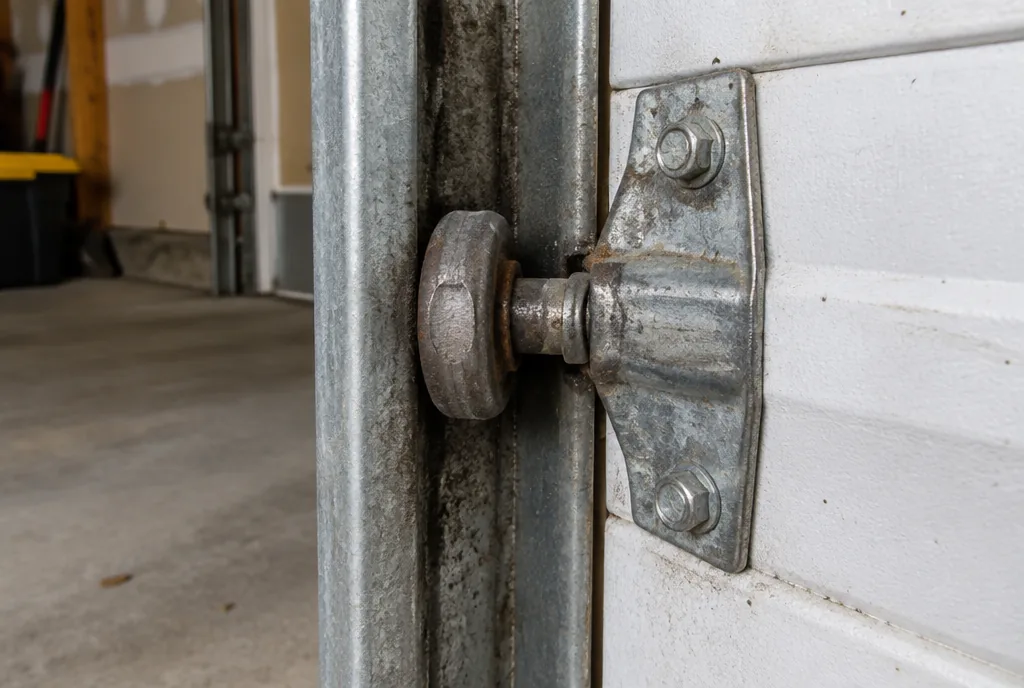
Grinding or rumbling along the tracks
This is the sound of worn rollers. Steel rollers have small ball bearings that dry out and pit over the years. When they stop turning freely, they drag and grind along the track. Look for rollers that wobble on their stems or have flat spots worn into the wheel.
Many builder-grade doors come with plastic rollers that have no bearings at all. They crack with age and cold. Replacing them with sealed nylon rollers is the biggest single change you can make to how a door sounds. That work is covered on our garage door roller repair page.
Squealing or squeaking
High-pitched squeals usually come from dry metal on metal. The hinges between door sections, the roller stems and the bearing plates at each end of the spring shaft all need lubricant once or twice a year. Use a garage door lubricant or a light spray made for the job. Thick grease collects grit, and penetrating sprays wash out what little lubrication is left.
Rattling and vibration
A door that goes up and down four or more times a day shakes its own hardware loose. Track brackets, hinge bolts and the opener mounting straps all work free over time. A rattle that travels through the house often comes from the opener straps or from a chain that has gone slack and is slapping the rail.
Popping or clunking as the door moves
A pop at the same point in each cycle usually means a door section is catching, a hinge has cracked, or a roller is jumping a dent in the track. A repeated clunk from above can be torsion spring coils binding against each other, which a little lubricant on the spring often quiets.
A single loud bang
One sharp bang followed by a door that will not lift is a broken spring. Do not run the opener. Our guide on what to do when a spring breaks walks through the next steps.
Scraping
Scraping means the door is rubbing something it should clear. Common causes are a track that has shifted out of plumb, a cable that is fraying against the drum, or a door that has dropped slightly on one side. A lopsided door needs attention soon. See what happens when a cable comes off.
Straining, humming or buzzing from the opener
If the noise comes from the motor unit, the opener is working too hard or wearing out. A grinding from inside the housing with a door that does not move points to a stripped drive gear. A hum with no movement can be a failed capacitor. Both are covered under garage door opener repair. If the opener is simply a loud chain model under a bedroom, compare the options in chain vs belt drive openers.
Why doors get louder in cold weather
Attleboro winters thicken old lubricant and shrink metal parts slightly, so clearances tighten and everything drags. A door that is quiet in July and loud in January is usually short on fresh lubricant and overdue for a check. There is more on this in our piece on winter garage door problems.
What you can do, and when to call
Lubricating hinges, roller bearings and springs is safe. So is snugging up the track bracket bolts and hinge bolts with a socket wrench. Leave the bottom brackets, the cables, the drums and anything on the spring shaft alone. Those parts are under spring tension.
If the noise is still there after lubrication, or the door shakes, sticks or sits crooked, call Johnny Garage Door Service at (508) 709-6644. We look at the whole door, since a noise in one place often starts with wear in another. You can also see all of our garage door services in Attleboro.