
Whether to repair or replace a garage door comes down to one question. Is the door itself sound? Springs, cables, rollers and openers are wear parts, and they can all be changed on a door that is otherwise in good shape. The panels, the frame of each section and the tracks are the door. When those fail, repair stops making sense.
Problems that are almost always a repair
- A broken spring. The most common failure, and a routine spring replacement.
- Frayed or slipped cables. Replaced as a pair along with any rusted brackets.
- Noisy or worn rollers. New rollers make an old door run like a newer one.
- An opener that will not respond. Sensors, gears, limits and boards can usually be fixed.
- A torn bottom seal or worn weatherstripping. Inexpensive and quick.
- One dented panel on a door whose model is still made, where a matching section can be ordered.
If the door is under fifteen years old and the sections are straight, repairing it is nearly always the sensible choice.
Signs it is time to replace the door
Rust through the bottom section
Road salt and standing meltwater attack the lowest panel first. Surface rust can be treated. Once the steel is perforated or the bottom rail has rotted, the bottom brackets have nothing solid to hold on to, and those brackets carry the full spring tension.
Cracked, sagging or delaminating sections
Older wood doors swell, split and sag in the middle. Thin uninsulated steel doors crease across the top section where the opener arm attaches. A reinforcing strut can save a door that is starting to flex. A door that has already folded is done.
Several panels damaged, or the model is discontinued
Panels have to match in profile, thickness and colour. When the manufacturer no longer makes the door, a matching section may not exist. Replacing two or three sections can also cost close to the price of a new door.
No insulation on an attached garage
Many Attleboro homes have a bedroom or family room above or beside the garage. An uninsulated single-skin door is the largest hole in that wall. An insulated steel door with a foam core holds heat far better, runs quieter and resists dents. Polyurethane foam gives more insulation per inch than polystyrene, so compare R-values when you look at options.
Missing safety features
Very old doors may lack pinch-resistant section joints, and extension springs may have no safety cables running through them. If the opener predates 1993 it may have no photo-eye sensors. Some of these can be added. On a tired door, they tip the balance toward replacement.
Repairs keep coming
One repair every few years is normal. Three visits in twelve months for different parts means the whole system is worn, and money is better put toward a new door.
A simple way to weigh it
Ask three things. Are the sections straight and free of rust-through? Is the door insulated well enough for how you use the garage? Can parts and panels still be found? Three yes answers mean repair. Two or more no answers mean it is worth pricing a replacement alongside the repair.
What a new garage door changes
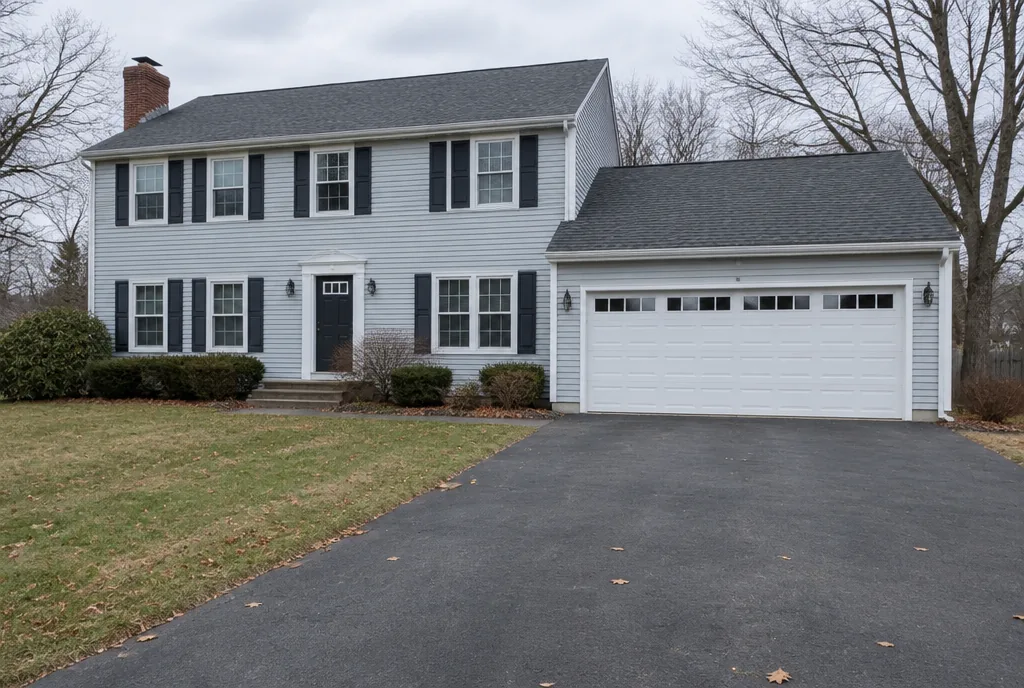
A new insulated door comes with new tracks, springs, cables and rollers matched to its weight, so the wear clock resets on all of them. It seals better against wind and blown snow, and it is the largest single feature on the front of many colonial and ranch homes in this area. Our garage door installation page covers door types, insulation and what the installation involves.
If the existing opener is old or underpowered for a heavier insulated door, it makes sense to look at garage door opener installation at the same visit.
Get a straight answer for your door
We would sooner fix a sound door than sell a new one. Call Johnny Garage Door Service at (508) 709-6644, describe the door and what it is doing, and we will tell you which way we would go and why. You can also request an estimate online or read about garage door repair in Attleboro.